
Our Services
Scalp micropigmentation for the appearance of fuller hair
An option for making thinning areas or a closely shaved scalp look fuller, using carefully placed pigment rather than transplanted hair.
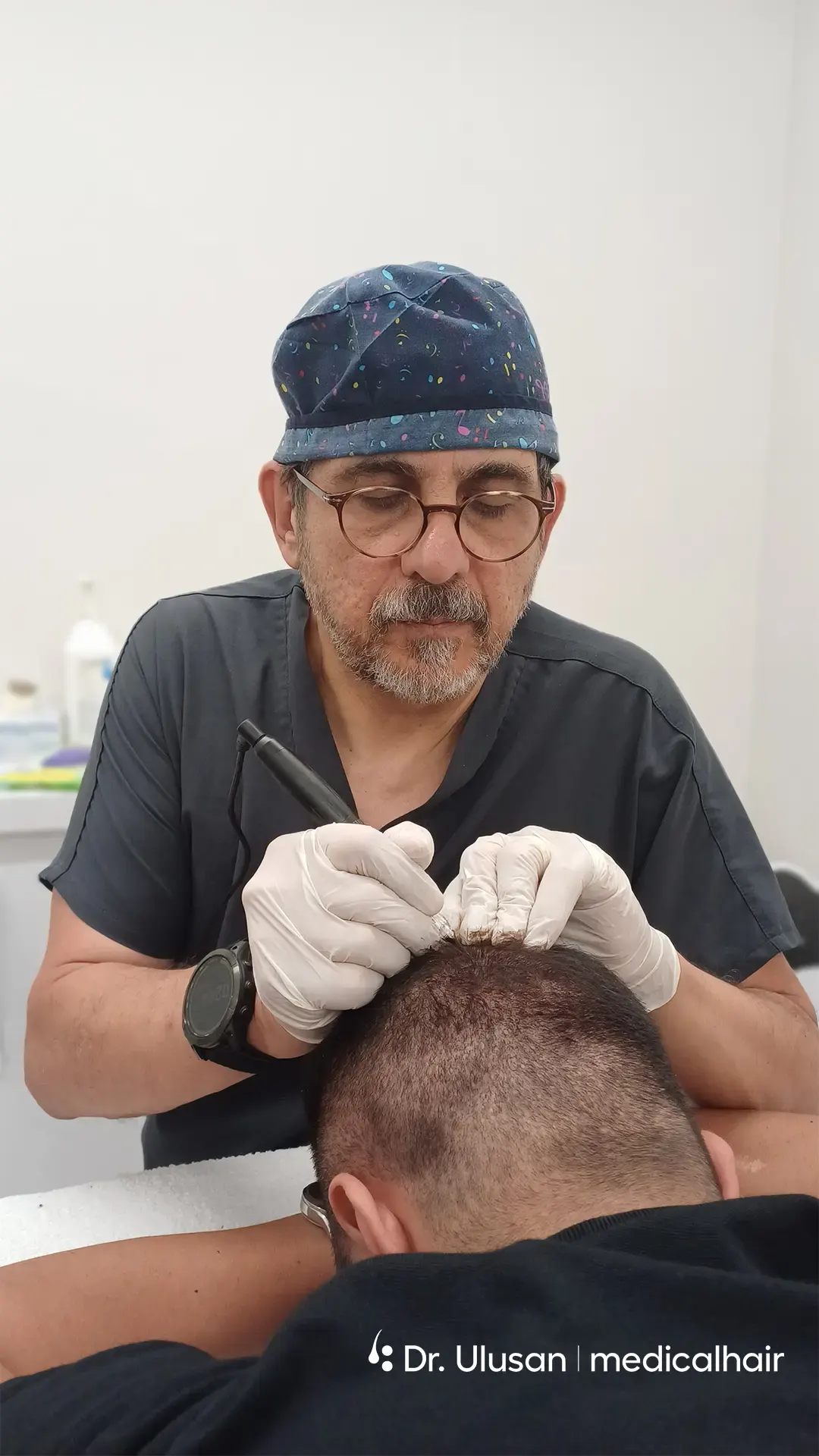
Overview
A visible scalp can affect how comfortable you feel with your hair, even when you are not looking for a transplant. Scalp micropigmentation uses small dots of pigment to soften that contrast. At Ulusan Clinic in Izmir, the starting point is to assess your scalp and discuss the appearance you want to achieve.
What SMP can change
SMP places pigment into the scalp to imitate the appearance of closely cropped hair. It can create a shaved-head effect or make thinning areas look less noticeable between existing hairs. In suitable cases, it can also help camouflage a healed scar.
The effect is visual: SMP does not produce new hair, add hair length or treat the cause of hair loss. The planned hairline, pigment shade and distribution need to work with your existing hair and the way you usually wear it.
Is it suitable for your scalp?
An assessment considers your pattern of hair loss, scalp condition, any scars and previous treatments. Active inflammation or infection needs medical attention before a cosmetic procedure is considered. If your hair loss is changing quickly, the plan should also take account of how your appearance may change later.
Bring photographs of the look you prefer, but also discuss what would suit your own hair and skin. A softly defined hairline may be more appropriate than copying a sharp outline from someone else’s result.
Planning your sessions and aftercare
The area to be treated and the amount of coverage determine the plan. Pigment is usually built up over more than one session, with time between appointments for the scalp to settle. Your clinician should explain the proposed design, who will carry out the treatment and how progress will be assessed.
Temporary redness or tenderness can occur. Follow the care instructions provided for washing, sun exposure and exercise; the timing depends on your skin and the procedure. Contact the clinic if pain, redness or swelling is worsening rather than improving.
Appearance over time and possible risks
Pigment can fade or change in appearance, so a later touch-up may be needed. Risks include infection, reactions to pigment, scarring and uneven colour or dot placement. Correcting an unwanted result can be difficult. Discuss the pigment, hygiene standards and realistic maintenance needs before deciding.
Discuss SMP with the clinic
Frequently Asked Questions
Will it look like longer hair?
No. SMP creates the impression of short hair or reduced contrast between the scalp and existing hair. It cannot reproduce the length, movement or texture of growing hair.
Can SMP be combined with a hair transplant?
Sometimes, but the two procedures address different concerns. Your scalp needs to be assessed, and any surgical area must have healed sufficiently before further treatment is planned.
What determines the price?
The size of the area, the condition of the scalp, any scar work and the number of sessions. Ask for a written plan that explains what is included and how future touch-ups are charged.
Medical Review
Content author: Ali Ulusan
Medically reviewed by: Uzm. Dr. Zafer Ulusan
Last reviewed: 2026-11-01
Last updated: 2026-11-01
This page is intended for informational purposes only and does not replace professional medical advice. A physician’s evaluation and examination are required for diagnosis and treatment planning.
Sources
- Scalp Micropigmentation (SMP): All You Need to Know - ISHRS
- Scalp Micropigmentation: Semantics, Terminology, and Standards - ISHRS
- Professional Standards for Scalp Micropigmentation Practitioners - British Association of Hair Restoration Surgery
- Tattoos & Permanent Makeup: Fact Sheet - US Food and Drug Administration